The story is already here. We help reveal its connections and give it form.
Photographs, letters, voices, recipes and film become one private edition - with clear provenance, honest gaps and room for different versions.
Family archive · synthetic materials
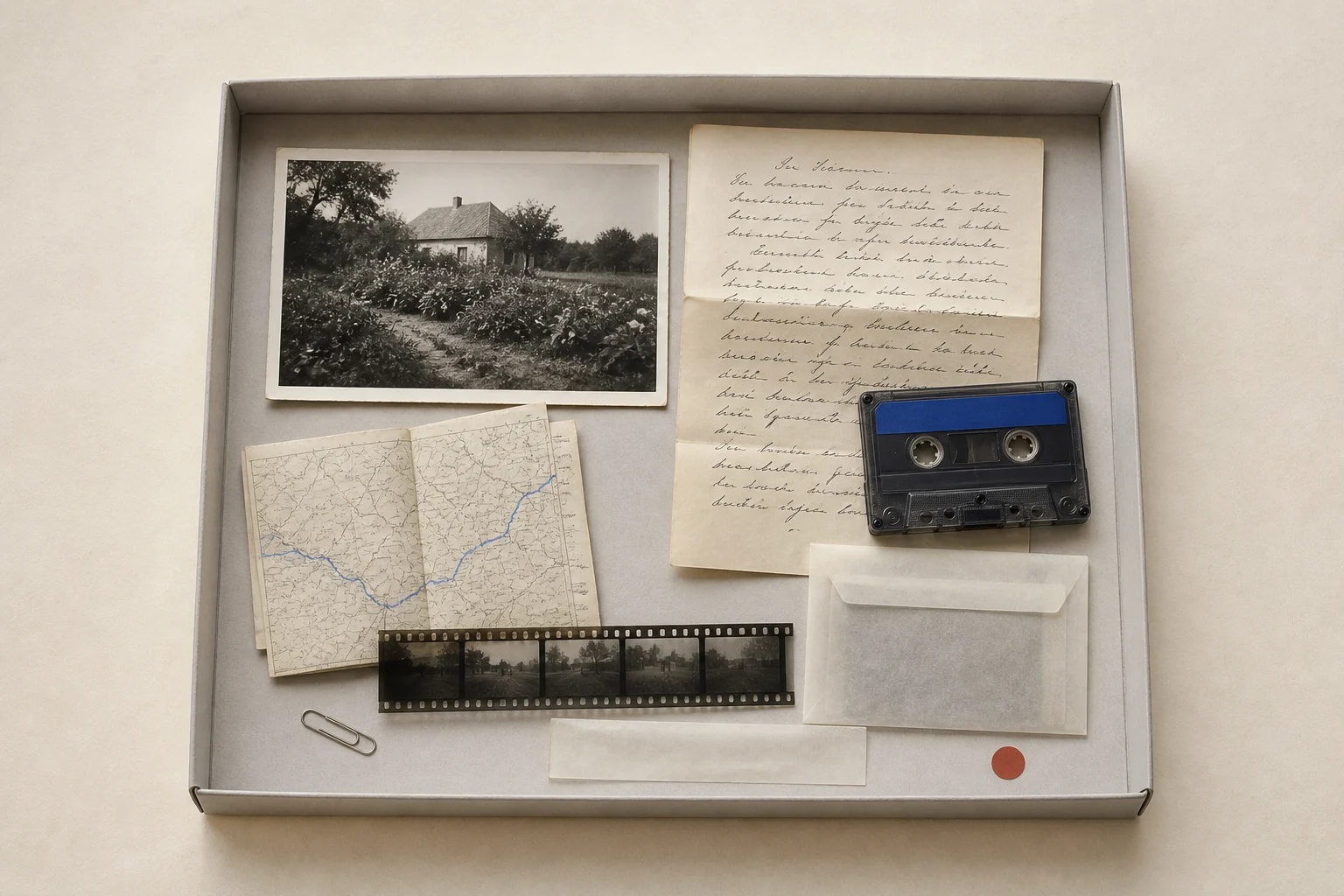
Materials preserve both answers and questions.
What memory is made of.
- Photographs
Prints, negatives and notes on the back
- Letters
Handwriting, envelope, date and intonation
- Audio
Voice, pauses and undeciphered fragments
- Maps
Routes, addresses and places of return
Supporting register 8 more ways to read
- 05 Film 312
- 06 Notes 1 204
- 07 Documents 438
- 08 Recipes 89
- 09 Video 44
- 10 Diaries 126
- 11 Dates 619
- 12 Names 284
Find a source, person, place or question.
Search covers titles, people, places, dates, descriptions, questions and connections. Everything below is fictional and stays in the browser.
12 detailed demonstration records across 12 archival source types.
-
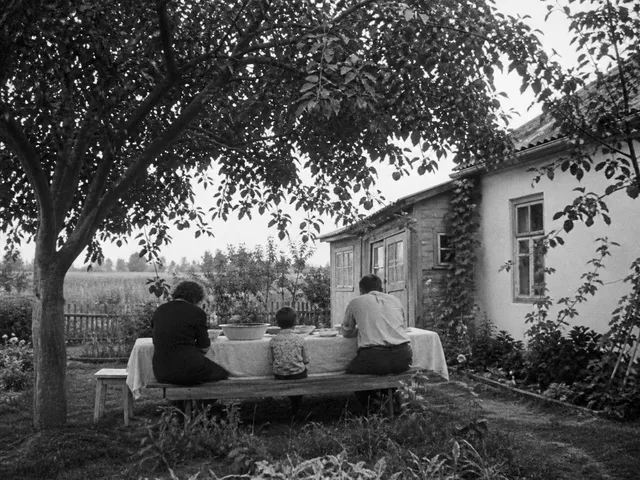
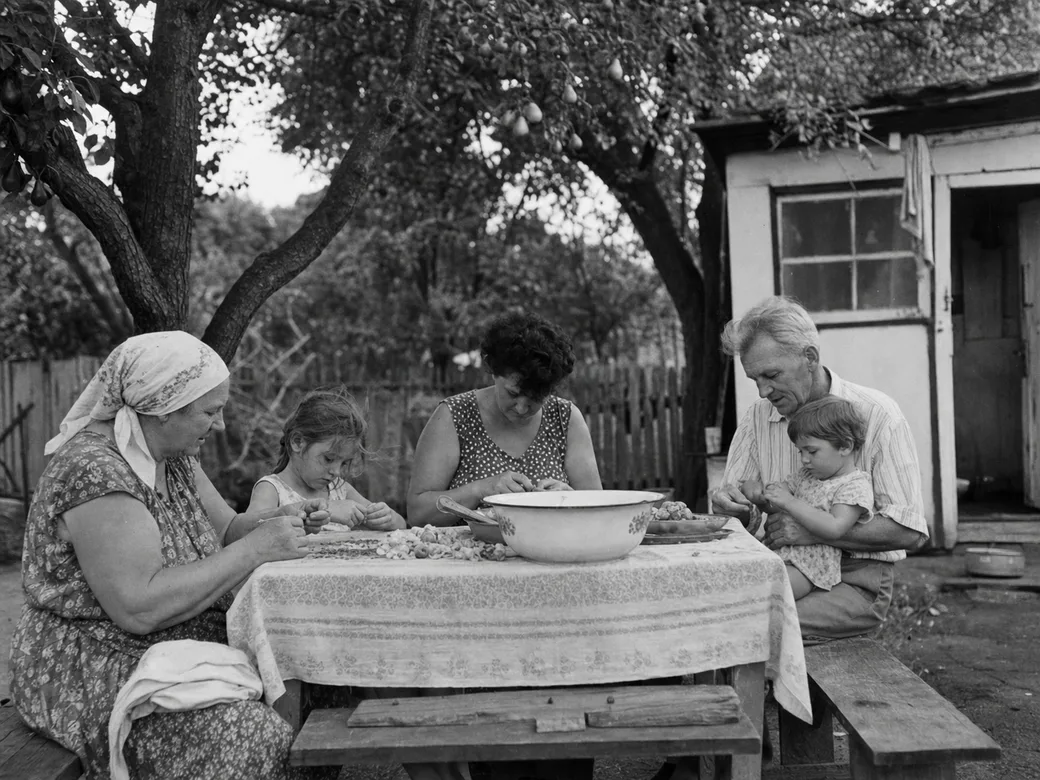
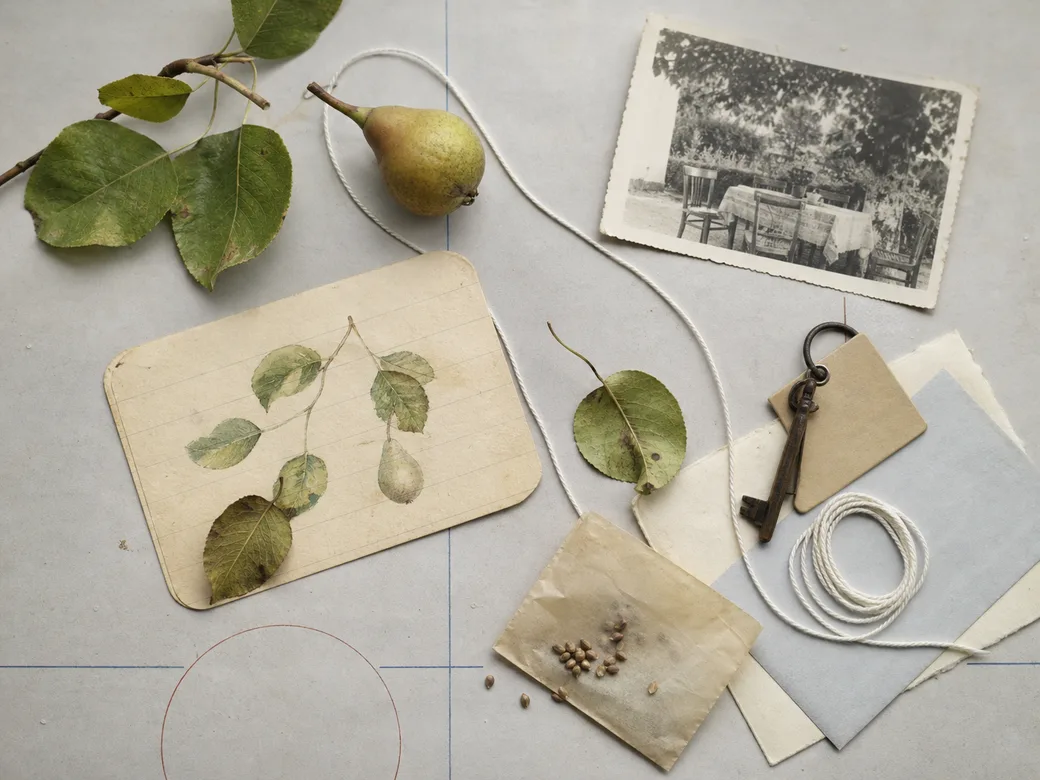
F-1989-07-18 Summer kitchen and pear tree Three people at a garden table; the reverse carries a short unsigned note. Photograph 1989 Assumption Record details
- Provenance
- A 9 × 13 cm paper print transferred by the fictional family in 2023.
- Open field
- Who made the photograph and left the note on the reverse?
- Connections
- Mariia, garden, cassette A-1983-08-21, recipe R-1998-04.
-
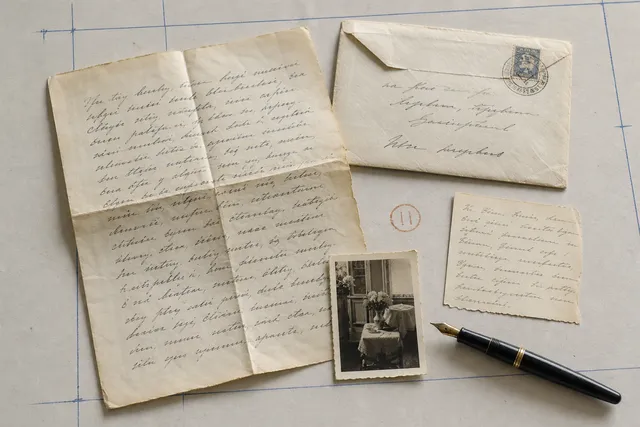
L-1974-06-17 Letter from Kharkiv Two pages about a move, the garden and the road to Kyiv; the author is signed. Letter 1974 Known Record details
- Provenance
- The letter and envelope remain together; the date and return address are legible.
- Open field
- Which Kyiv house is described as the new home?
- Connections
- Mariia, Kharkiv, Kyiv, map M-1968-05, diary D-1999-02.
-
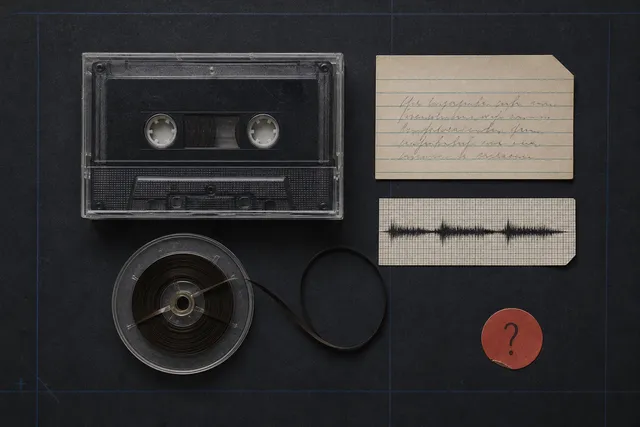
A-1983-08-21 Conversation about the garden Twenty-three minutes of voices, pauses and tree names; two speakers are identified. Cassette 1983 Known Record details
- Provenance
- A compact cassette with a handwritten date; the original is retained and a local copy exists.
- Open field
- Who is the third voice in the short closing fragment?
- Connections
- Mariia, Hanna, pear tree, photograph F-1989-07-18, note N-1978-11.
-
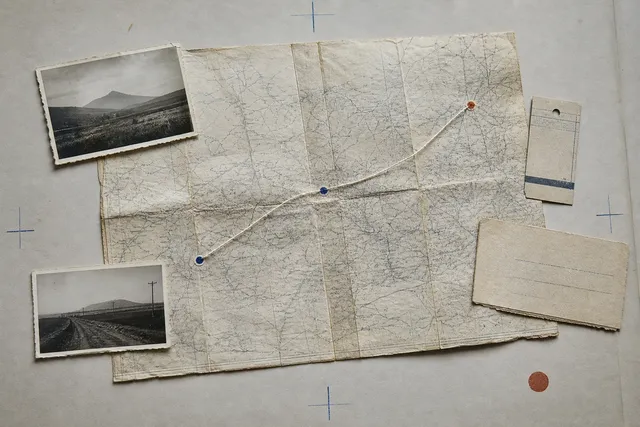
M-1968-05 Poltava region - Kharkiv - Kyiv A folded road map with three blue marks and one corrected route. Map 1968? Assumption Record details
- Provenance
- The map has no cover; the month is pencilled and the year is inferred from adjacent letters.
- Open field
- Does the clay mark indicate a stop or the final address?
- Connections
- Letter L-1974-06-17, road home, Kharkiv, Kyiv.
-
P-1989-07-19 Seven frames by the table A negative strip shows the same day before and after the principal photograph. Film 1989 Known Record details
- Provenance
- Black-and-white 35 mm film in a labelled paper sleeve; the sequence is complete.
- Open field
- Why does the eighth sleeve number have no corresponding frame?
- Connections
- Photograph F-1989-07-18, shared table, garden, Mariia.
-
N-1978-11 Names on the back of an envelope Five names, two arrows and the word “garden” without explanation or signature. Note 1978? Question Record details
- Provenance
- The envelope fragment was found among letters from 1977 - 1979; no exact date survives.
- Open field
- Which of the five names belong to people in the photographs?
- Connections
- Cassette A-1983-08-21, name index I-2003-04, garden.
-
C-2003-04 Archive transfer record Two pages listing boxes, signatures from both parties and the transfer date. Document 2003 Known Record details
- Provenance
- The original is in the accession folder; a digital copy links to each box number.
- Open field
- Did the separate cassette list mentioned in the note ever exist?
- Connections
- Boxes 01 - 04, local copy, indexes T-1966-2003 and I-2003-04.
-
R-1998-04 Pear and apple pie A card with ingredients, two corrections and a note about the shared table. Recipe 1998 Known Record details
- Provenance
- The handwritten card was tucked into the 1999 diary; paper and ink correspond.
- Open field
- Who made the second correction in a different pen?
- Connections
- Mariia, pear tree, photograph F-1989-07-18, diary D-1999-02.
-
V-1991-06 Garden before the move Forty-four silent seconds: the house, trees and a person by the gate. Video 1991? Assumption Record details
- Provenance
- A VHS fragment digitized locally; the date comes from the cassette label.
- Open field
- Is this the same move mentioned in the 1974 letter?
- Connections
- House, gate, letter L-1974-06-17, map M-1968-05.
-
D-1999-02 Notebook of returns Twelve short entries about roads, addresses and an annual return to the garden. Diary 1999 Assumption Record details
- Provenance
- An unsigned school notebook; the author is inferred from handwriting in the letters.
- Open field
- Which of the two April addresses was permanent?
- Connections
- Road home, Kyiv, Poltava region, letter L-1974-06-17, recipe R-1998-04.
-
T-1966-2003 Known, approximate and open dates Forty-seven dates retained with their method of attribution and confidence level. Date index 1966 - 2003 Question Record details
- Provenance
- The index combines captions, letters, packaging and oral clarification from the fictional family.
- Open field
- Nine dates have only a decade; four remain undated.
- Connections
- All 12 demonstration records, chronology, confidence levels.
-
I-2003-04 Names, variants and unidentified people Twenty-eight names, six spelling variants and three people awaiting confirmation. Name index 2003 Question Record details
- Provenance
- The index draws from letters, captions, cassettes and the archive transfer record.
- Open field
- Do “Marusia” and “Mariia” in the cassette and letter name the same person?
- Connections
- Mariia, Hanna, note N-1978-11, cassette A-1983-08-21, letter L-1974-06-17.
Nothing matches this search.
Try another name, place or period - or show every record.
One caption changes a photograph. One voice restores a letter’s intonation.
Not to digitise everything. To see the connections.
One uncertainty reveals an honest gap instead of an invented answer. So we build context first, then sequence.
01 Gather
First, see the whole field.
Materials receive temporary numbers, short descriptions and a visible status. Nothing has to be decided or discarded immediately.
- F-1989-07-18 Photograph caption missing
- L-1974-06-17 Letter author known
- A-1983-08-21 Cassette transcription required
- M-1968-05 Map route being clarified
02 Clarify
Known facts, assumptions and questions remain separate.
Every date, name and caption retains its source. Uncertainty remains a visible part of the story.
03 Connect
Different media begin to speak together.
A photograph finds a voice. A recipe finds a place. A letter finds a route. The connection does not replace the source; it leads back to it.
- Photograph Summer kitchen and pear tree
- Voice Cassette with a conversation about the garden
- Recipe Apple pie
- Route Poltava region - Kharkiv - Kyiv
04 Sequence
The narrative has rhythm without erasing contradictions.
The editorial sequence combines major events, quiet details, pauses and several possible readings.
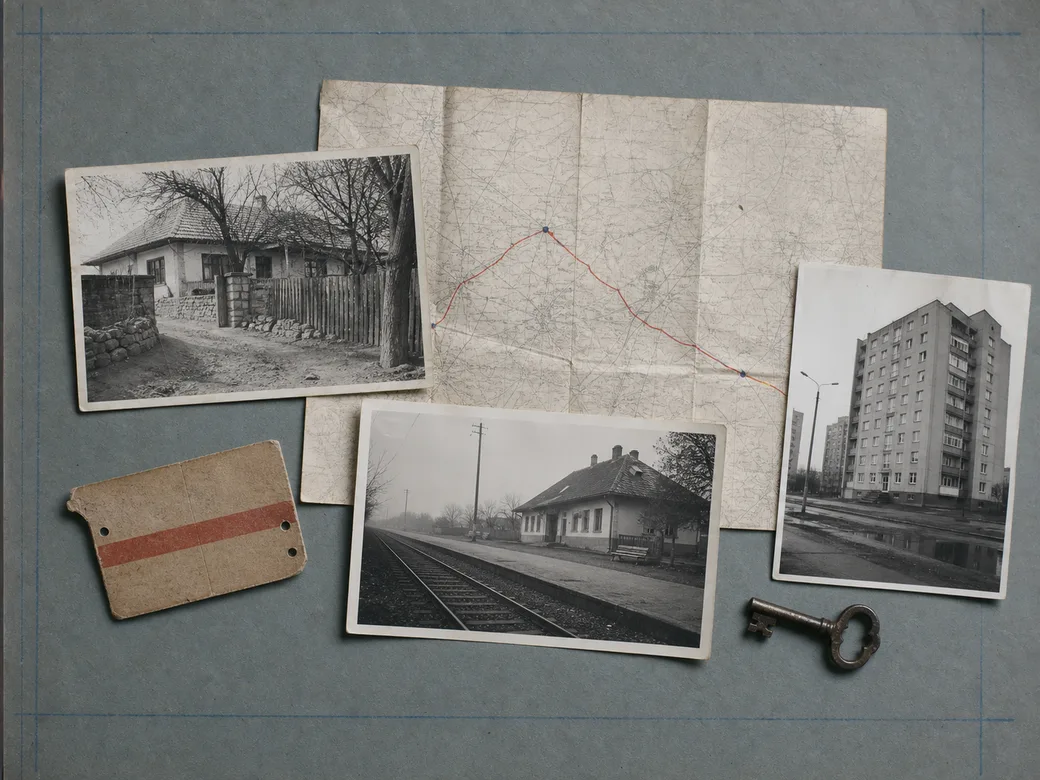
- Entry The road home photograph + map
- Pause Voice and detail cassette + recipe
- Open What remains question + blank field
05 Give form
The archive becomes something worth returning to.
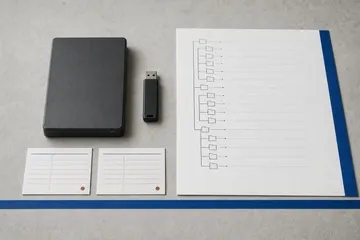
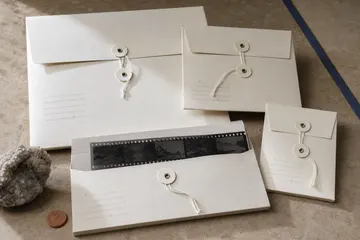
The book, index, local copy and labelled envelopes work as one set - understandable without specialist software.
Each fragment remains distinct. Together they form a route.
From scattered media to the rhythm of an edition
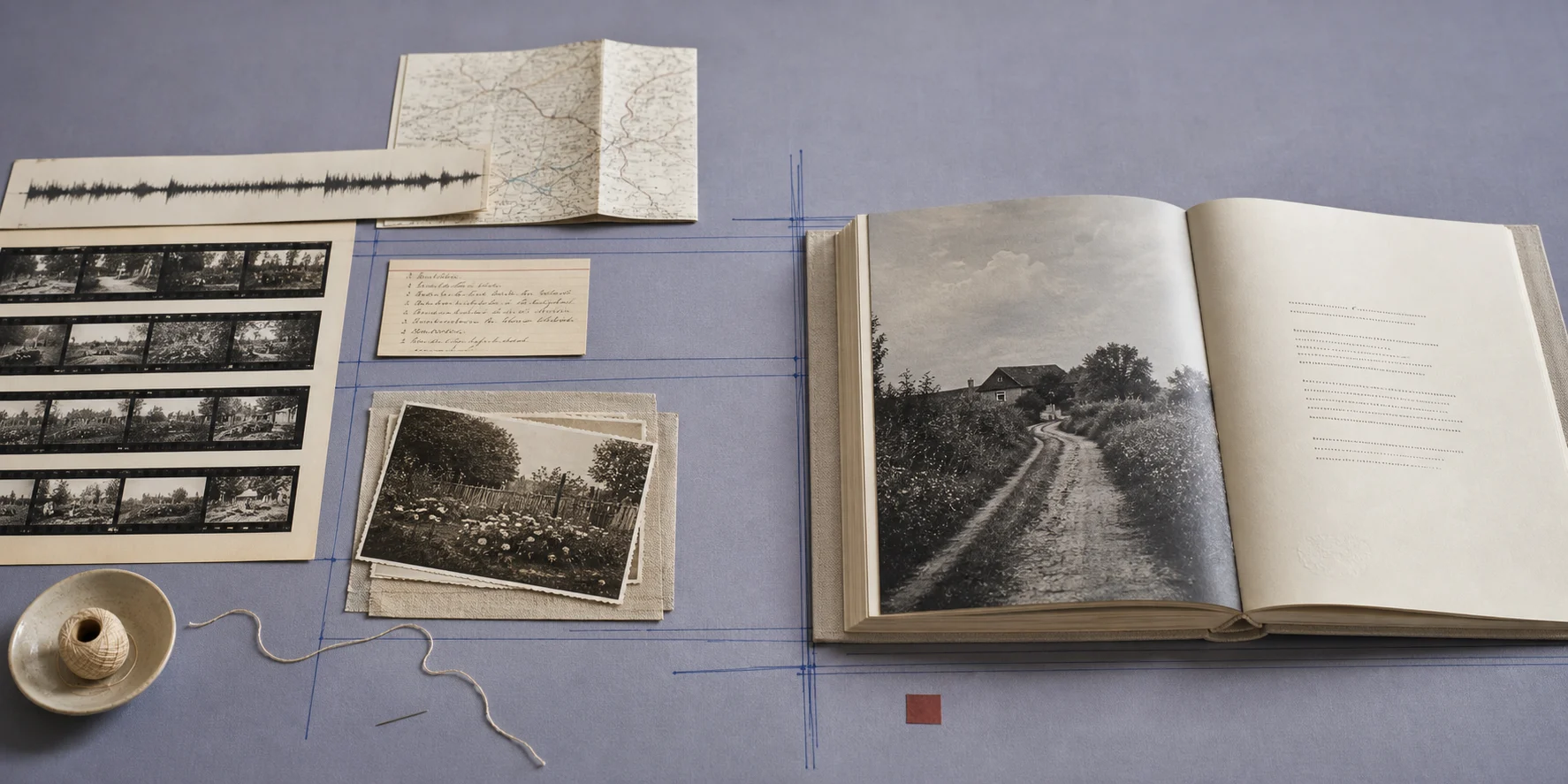
- 01 · confirmed The map repeats the route in the letter
- 02 · needs clarification The caption’s author is unknown
- 03 · in the edition The connection leads back to the source
One story, many media.
Archive 01 · Garden Line
Choose a way to read. The sources will not change - the connection brought to the foreground will.
 Fragment · people
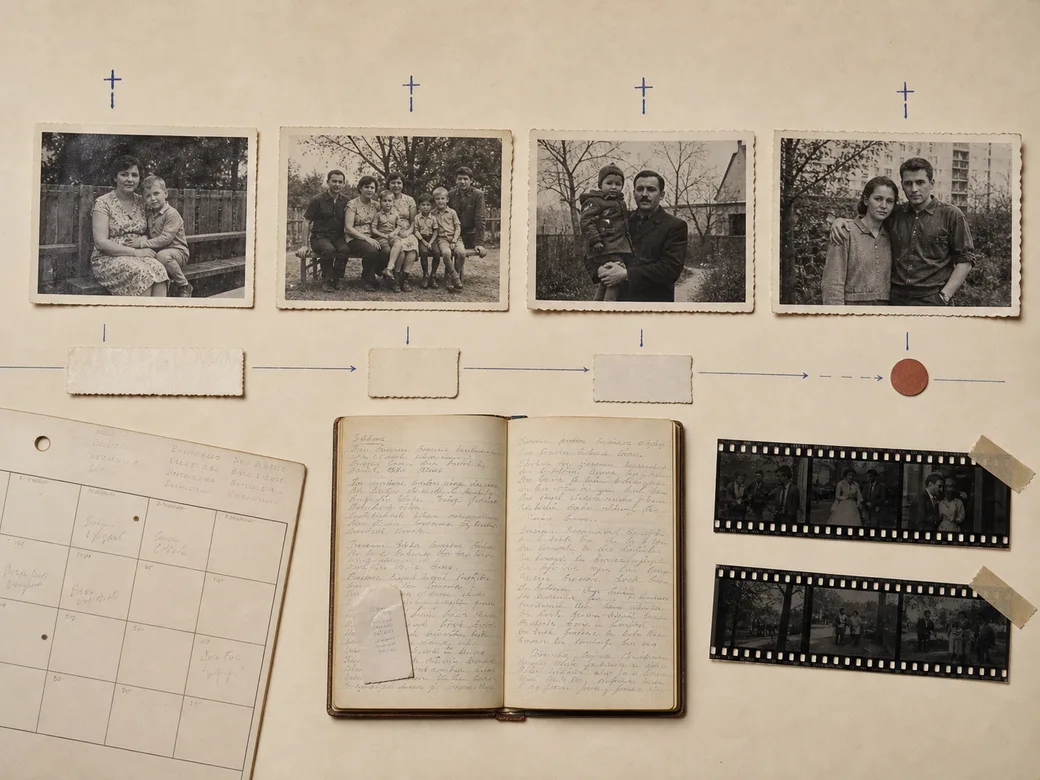
 Mariia connects a 1989 photograph, a cassette, a recipe card and seven frames beside the table.
- Cassette A-1983-08-21
- Recipe R-1998-04
- Letter L-1974-06-17
From box to edition.
Form does not hide the archive’s complexity. It provides routes: read the story, find the source, verify the caption, return to the voice.
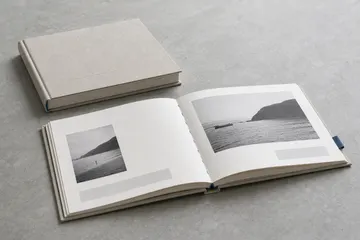
- 01 Archive book story and complete references
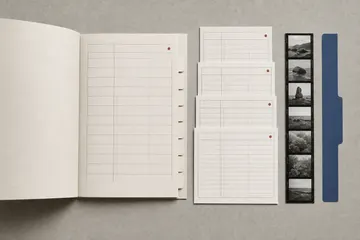
- 02 Printed index people, places, dates, themes
- 03 Local copy files and a clear structure
- 04 Labelled envelopes return to originals
An archive begins not with order, but with attention.
To the note on the back. To the pause in a voice. To the question that can still be asked.
The full context. Without excess noise.
- Source Every fragment preserves a path back to the original.
- Voice Intonation and uncertainty do not disappear in retelling.
- Connection People, places, dates and themes are read together.
- Sequence The narrative helps movement without presenting montage as fact.
- Access The archive is understandable as a book and a local set of files.
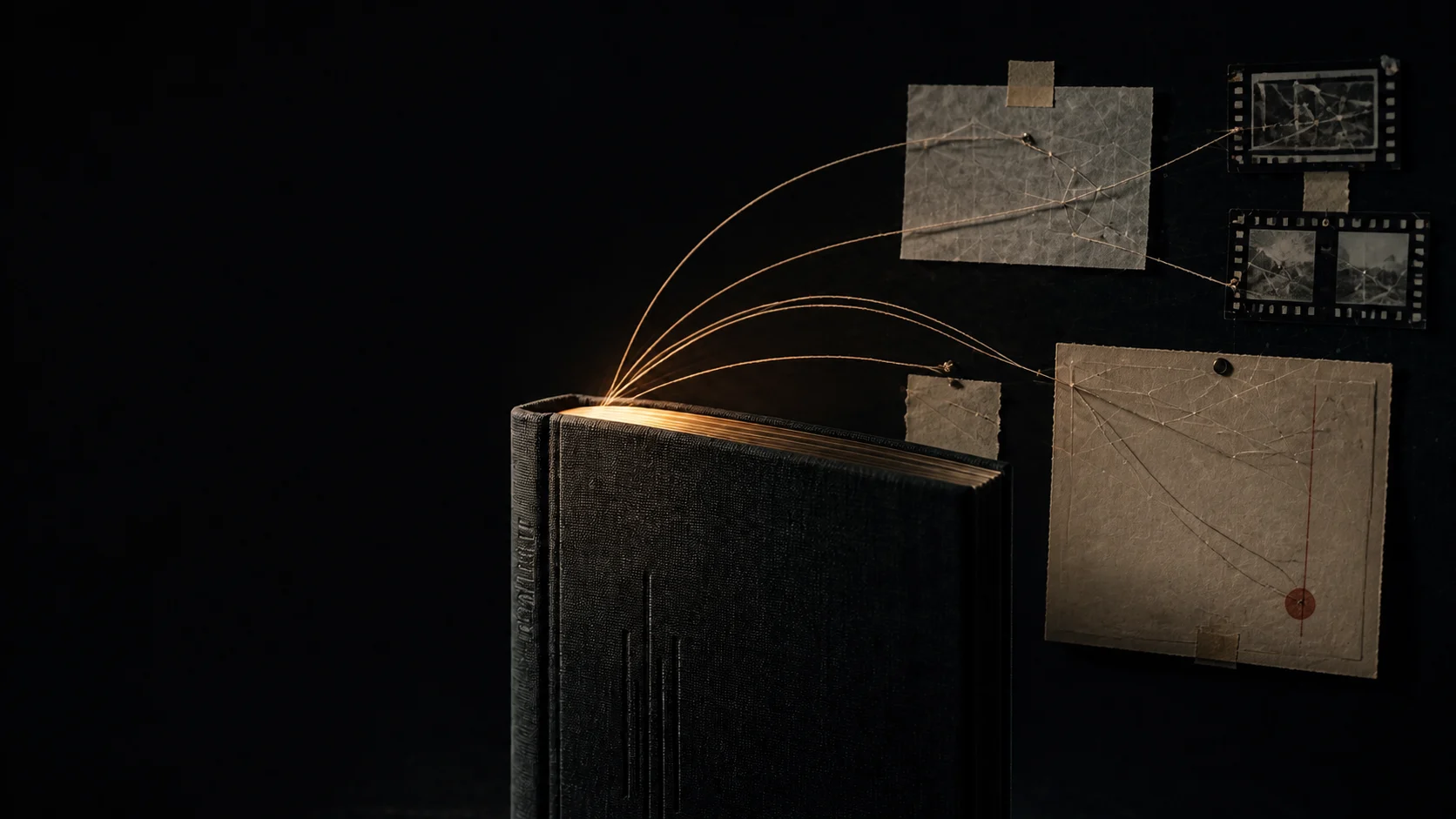
TEKA · Garden Line Thread shows the connection. A clay marker keeps the question open.